
Cross Country Mountain Bike Tires
Posted by Sarah in Blog on 03 17th, 2013 | no responses
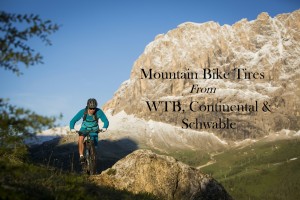
Despite today’s snowy weather, we’ve been thinking about mountain biking a lot! And we’ve been thinking about how to choose mountain bike tires. So we thought we’d lay out some of the basics.
Watch our Bar Side Chat from Jay P and Brandon about selecting mountain bike tires. Bar Side Chat, Season 2, Ep. 12: Mountain Bike Tire Selection
The Basics:
- What size tire do you need?
- Tires come in three main sizes: 26″, 650b (27.5″) and 29″ that will correspond to your wheel size. You’ll need to know what size wheel you have.
- Consider the width of the tire:
- For most cross country and trail riding you’ll be looking for a tire between 2.1″ and 2.5″ inches. This is the sweet spot for single track riding.
- This width will balance grip (wider tires generally give more grip) and weight (wider tires are also generally heavier than narrow tires)
- Wider tires will give you more volume and a more supple ride at the same tire pressure
- You don’t need to run the same width tires in the front and the rear, in fact, our shop manager prefers to run a wider tires on the front and a narrower tire on the rear. This saves him some weight on the rear wheel while still giving him the grip and volume he likes in on the front wheel.
- The tread pattern will give you an idea of how the tire performs:
- Bigger, blockier knobs give better grip than smaller, smooth knobs
- Look for side knobs to give you great cornering grip
- Smoother knobbed tires will have lower rolling resistance but less grip in general and will not perform well on muddy or loose conditions
- Many tires are directional - that means that the manufacturer will have a suggested direction to run the tire - or they are front or rear specific. But these are just suggestions - you might run a directional tire the other way because you like the way it grips.
- Tubed or Tubeless?
- Tubeless set up can be lighter, allows you to run lower pressure (which can be faster), and you won’t pinch flat
- To run tubeless you ‘ll need to make sure the tire has a special bead that allows it to run tubeless and that the wheel is also compatible. Some non-tubeless tires can be run tubeless but they are usually more difficult to air up.
- Tubed set ups don’t require a special wheel or tire.
- Sidewall and tire construction:
- If you ride where there are sharp rocks or goatheads consider getting a tire with extra sidewall protection. There is nothing worse than having a huge cut in your tire or multiple thorn punctures.
Those are a lot of considerations, but we’re here to help. Stop by the shop or give us a call at 208-787-2453 and we can help you select the best tire for your riding style and bike. And you can check out our favorite tires here.
Leave a Reply
Recent Posts
Friends
Categories
- Bicycle Advocacy / Community Building (2)
- Bike Videos that Rock (34)
- Bike-In Movies (1)
- Blog (564)
- Community Events (63)
- Events (73)
- Fat Bikes (8)
- Featured (24)
- ID (3)
- Jackson Area Trails (17)
- Jackson Hole (1)
- Jackson Town Trails (32)
- JH Criterium (2)
- Moose Cross (4)
- Other Races (15)
- Pathways (19)
- Races (67)
- Run & Ride (2)
- Sales (11)
- Shop Rides (12)
- Snow Biking (7)
- St. Patrick's Day Party (2)
- Teton Pass Trails (40)
- Teton Valley, ID (21)
- The Transparent Bike Shop (1)
- Trail Conditions (23)
- Trail Information (5)
- Transparent Bike Shop (2)
- WY (1)
- WYDAHO Rendezvous (7)
Find us on Facebook